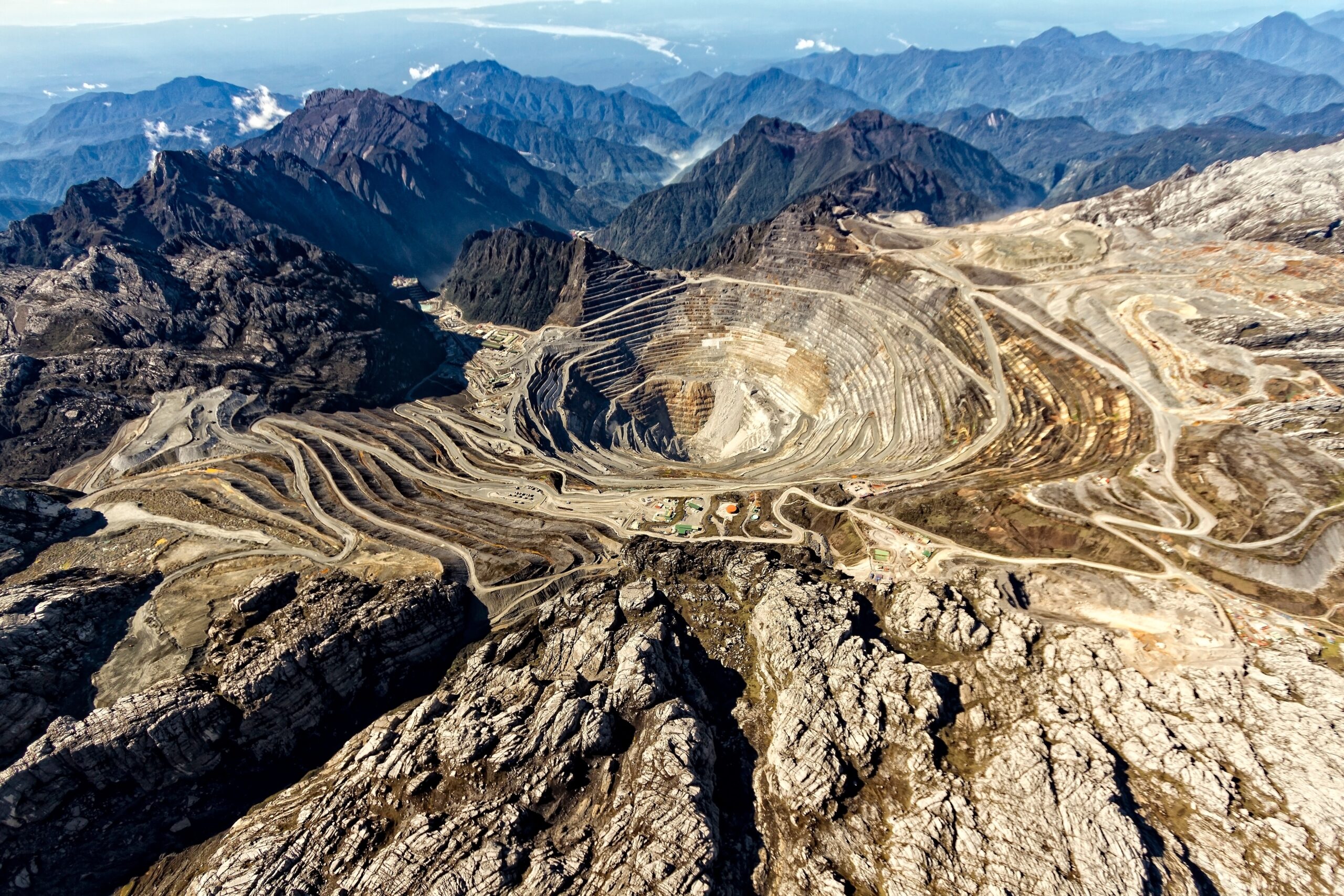
Located in the province of Papua in Indonesia, Freeport McMoRan’s Grasberg Mine is one of the world’s largest open-pit and underground copper and gold mines. Mining operations and tailings, which are laden with hazardous waste, repeatedly displace local communities, damage food supplies, and destroy aquatic life closely tied to traditional livelihoods.
Freeport McMoRan is a member of the International Council on Mining and Metals (ICMM) — one of the co-conveners of the Consolidated Mining Standard Initiative. As an ICMM member, Freeport McMoRan has committed to implementing the Global Industry Standard on Tailings Management.
Since 1990, the Arizona-based mining company has dumped a total of 1.8 billion metric tons of mine waste directly into the Ajkwa river system where it flows into an area of lowland forest, a practice almost universally banned across the globe. A series of dikes and levees fail to contain the waste, which contaminates the surrounding land, an area of lowland and mangrove forest, before spilling into the Arafura Sea.
The heavy-metal filled tailings are expected to remain in the sediment of the Ajkwa estuary for centuries after mining is completed. And while a deal struck between Freeport and the Indonesia state owned mining company, PT Mineral Industri Indonesia (MIND.ID), means Freeport no longer holds a majority stake, its Indonesian subsidiary still operates the mine and holds responsibility for this massive and ongoing environmental disaster.
In addition to its environmental harm, several worker safety incidents have occurred at the Grasberg Mine in the past three decades. In 2003, a massive landslide killed eight mine workers and injured five more, sparking protests that alleged the company ignored information that a landslide was imminent. Similar incidents in 2006 and 2013 resulted in dozens of Freeport worker deaths. In the fall of 2025, a landslide killed seven workers, adding to the mine’s long history of concerns on mine worker safety.